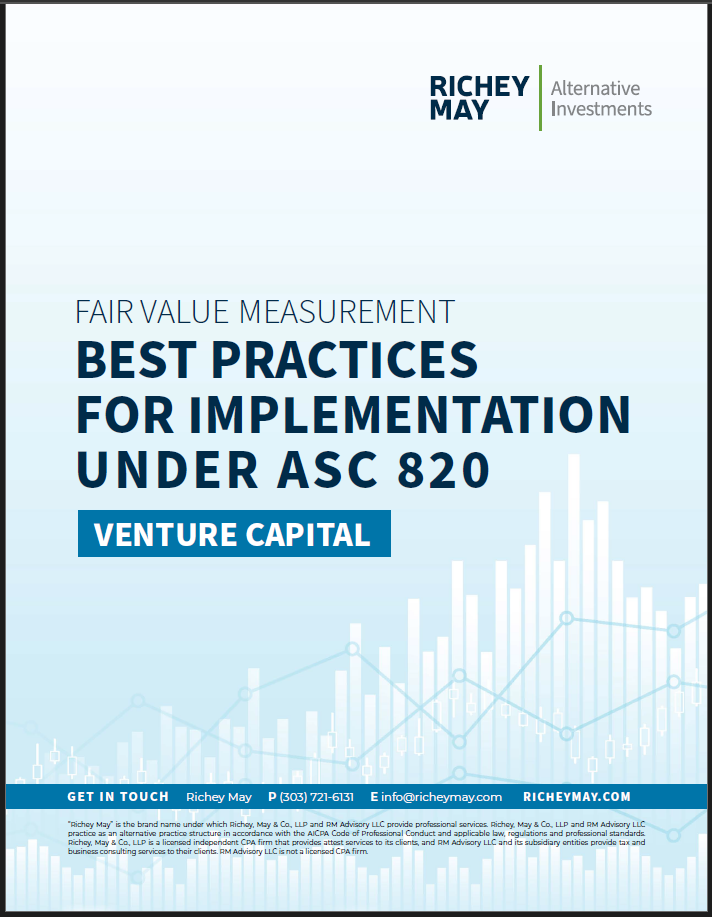
Valuing early-stage portfolio companies is one of the hardest judgment calls venture capital fund managers make. This companion to our full ASC 820 fair value guide pulls out the sections most relevant to venture capital funds, with practical notes on valuation approaches, disclosures, and common questions.
What’s New for 2026
ASU 2026-03. The guide now addresses ASU 2026-03, which the FASB issued in September 2026. It requires investment companies within the scope of ASC 946 to consider contractual sale restrictions, such as lock-up agreements, when measuring the fair value of equity securities, a change from ASU 2022-03, which excluded them. The update takes effect for annual periods beginning after December 15, 2027, and early adoption is permitted.
- Aging rounds of financing. Once a round is more than 12 months old, the passage of time alone does not require a change in valuation, but it does increase the need for robust supporting analysis.
- Market participant perspective. New language emphasizes reflecting market participant assumptions rather than defaulting to the last transaction price or relying on entity-specific views.
- Early-stage investments. The income approach is now described as generally less appropriate, rather than off-limits, for portfolio companies with minimal revenue.
View the Venture Capital Guide
What the Guide Covers
Topics include valuation approaches based on the last round of financing, discounts and premiums, early-stage investments, going concern and expected sale considerations, the fair value hierarchy, Level 3 disclosures, and frequently asked questions on private operating companies and private investment companies.
What’s Next
If you have questions about fair value best practices for your venture capital or private equity fund, contact Steve Vlasak at svlasak@richeymay.com.